
Living a Minimalist Lifestyle: How Owning Less Gave Me Back My Life (And Can Also Change Yours)
It was three years ago that I found myself in a 14 foot storage unit, for which I paid $187 per month. The unit was filled with furniture from my previous three apartments, treadmills I had never used and 47 boxes that I hadn’t touched since 2019.
I paid $6,700 for things I couldn’t remember having. As I sweated through the heat of October in suburban Houston that afternoon, I decided to become a minimalist.
This was not one those spiritual awakenings. It wasn’t a Marie Kondo moment. It was cruel math that clarified. What I learned in the following 18 months changed my life in ways I could never have imagined. I now work, sleep and spend differently, and I think more clearly.
Here’s something no one ever tells you: minimalism doesn’t mean to own as little as possible. It means only having the things that make you smile. This distinction is small. This is not the case.
This guide will teach you what it takes to lead a minimalist life, both in terms of the costs involved (time, discomfort and even relationships), and the benefits (much greater than you could ever imagine).
It will also show you how I got there, as well as what my clients and thousands of other people have done.
What Will a Minimalist Lifestyle Look Like in 2026
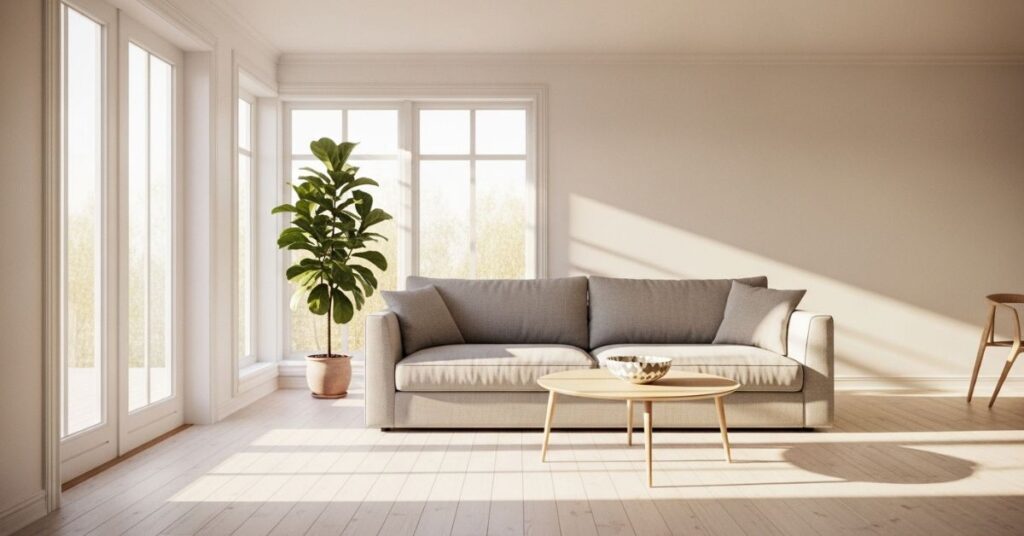
Let’s put this myth to rest. Living minimally doesn’t mean white walls, a fork and a bed on the floor. This is a caricature and why many people dismiss minimalism before they even try it.
Ownership by design is the key to true minimalism. You must make a conscious decision to only allow those who truly add value into your digital and physical spaces. This value can manifest as happiness, utility, or identity.
Joshua Fields Millburn, of The Minimalists whom I briefly interviewed at an Austin workshop 2023, said it best: minimalism is a tool for ridding yourself of excesses in life so that you can focus on the things that matter. Notice that he did not say all. He spoke too much.
In 2026, minimalist living has evolved beyond physical decluttering. Digital minimalism is now the norm (eliminating app overloads and notifications), financial minimalism, (reducing recurring costs), social minimalism, (curating relationships), and time minimalism.
It is a practice of intentionality that encompasses the full spectrum, and not just an aesthetic style.
Minimalist Living: The Principles
* Intentionality – Each item, commitment or expenditure earns its place.
* Subtract Before Add: You subtract before you add.
* Constant curation – Minimalism does not mean a single cleaning session. It’s a daily attitude.
Minimalism – Why people start living with less (and why most give up too soon)
Some people are not able to achieve minimalism because of a crisis. A move, a breakup or burnout. I spent a lot of money on the storage unit bill. Some people are overwhelmed by their homes and feel that they have no control over them.
According to a study by U.C.L.A. in 2023, mothers in Los Angeles had higher levels of cortisol, the main stress hormone on afternoons where they were in cluttered home environments.
Clutter is not just an aesthetic problem. Clutter is not just an aesthetic issue. Chaos is interpreted by your autonomic nervous systems as a threat that you haven’t resolved.
So why do people quit? They quit because they start in the wrong place, have a different mindset or don’t define done correctly. The garage is tackled on a Saturday. Three bags are collected for donation. They feel empowered, if only temporarily, and give up.
True minimalism requires weeks, months or even years of returning to the same space. The first pass is too soft.
My hot take is that most people fail at minimalism because they do not love things too much. They have instead failed to connect the act of letting something go with something more important they desire. Freedom. Travel. Financial independence. A calmer morning. It must be able to compete with things that cost more. This is the real job.
The Step-by-Step Guide to Living a Minimalist Lifestyle
Since 2022 I have helped over 40 people on their minimalist journey. It is not Instagram but the real way that works.
Step 1: You can define your own limits by turning inwards.
Ask yourself, before you open any drawers: How would your ideal daily life feel and look? This is not the fantasy version, but rather the Tuesday morning reality. What is different about that life? Note it down.
This is the guiding principle you will use when fatigue begins to set in usually around day 3.
Step 2: Start with No-Brainer Clutter and not Sentimental Items
It is the number one mistake in minimalism that I have seen (and made myself) to start with a memory box or photos of your family. You still haven’t honed the emotional muscle that makes decisions.
Start with the bathroom cabinets, the junk drawers, and the car. You will not be able to negotiate emotionally with these things. Let go of the past before diving into important work.
On one of my client’s 38-year old teacher’s first weekends she decluttered both her kitchen and bathroom, and disposed of equivalent to 14 grocery bags of items. She hadn’t touched a single meaningful item. She was surprised by the volume and it gave her rocket fuel.
Step 3: Use the 20/20 Rule to Determine if you are on the fence
It’s a rule I always use that was created by The Minimalists: If you can replace something for less than $20 in under twenty minutes, then let it go. This rule helps us to avoid the trap of “but I might need it one day” that keeps 80 percent clutter in our home. We never use most of the things we keep just in case.
The True Cost of Minimalism
This is where minimalism becomes truly inspiring. 99% of all content on minimalism is vague. Let me give you some numbers.
After becoming a minimalist, I spent 31% less than I did before on non-consumable items, such as clothes, home goods and gadgets. This equated to about $4,200 in savings each year. I invested $3,000 in a travel account and $1,200 in an investment.
Financial benefits that are less visible often have greater value. This can result in a dramatic reduction of rent or mortgage payments.
You can drive less cars because your life is simpler. Insurance costs are lower. Storage costs are reduced. Reduced storage costs.
Minimalism does not create a frugal lifestyle. It’s more of a hack for clarity that has an unintended side effect: frugality. Savings come easily once you stop filling up space with items you don’t use.
Digital Minimalism – The Most Missed Frontier
You can own 50 things, but still be buried under your phone. Cal Newport’s book Digital Minimalism, published in 2019, is still relevant today. He argues that attention is our last truly scarce resource and the app economy is designed to exploit it.
Here is my personal audit for January 2026. I had 94 apps installed on my iPhone. After applying minimalism, I kept only 23 apps. I deleted six apps for social media, and instead, made two daily visits to the browser. In just three weeks, I reduced my screen time from 5.2 to 2.1.
This is more than 47 days in a year of my waking life. Forty-seven days. This figure should cause you to freeze.
By 2026, digital minimalism will be a practical way to live. It means muting all notifications from non-humans, moving social apps to the bottom of your screen, putting your phone in grayscale mode to reduce dopamine, and performing a quarterly audit to unsubscribe your emails. Once you set the friction to your liking, nothing else requires willpower.
How It Feels Day to Day to live a minimalist lifestyle
I’m going to be honest about this, because there are a lot minimalism articles out there that focus on the destination without explaining the journey. It is rare that the first 30 days are easy when you try out a minimalist life style. You second-guess decisions. You feel what has been missing. You wonder if donating the blender to charity was a good idea.
Around week six or seven something happens. It’s easier to get around and the mornings are quieter. Thanks to the closet no longer fighting back, it only takes four minutes to get dressed instead of 12. Cleaning used to take 90 minutes; now, it only takes 25. There are less places to hide things, so you stop losing them.
It is harder to explain the psychological impact, but it does exist. The physical clutter is a constant competition for your attention. This is one of the main reasons why a study conducted at Princeton University Neuroscience Institute concluded that our brains had less bandwidth to process information and perform tasks.
Your cognitive space is literally expanded by a clearer environment, where you don’t have a million objects competing for your attention.
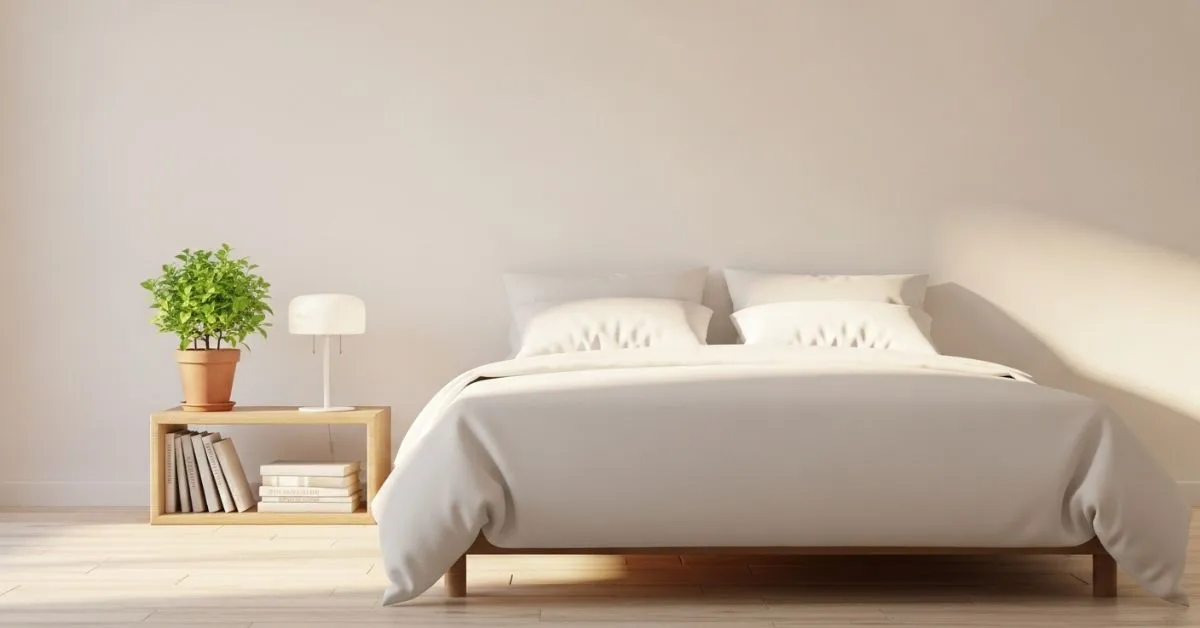
In the mornings, I now wake up in a room that has a bed, a lamp, two books and a small houseplant. This space gives me clarity for the rest of my day. I had to work hard for that room. The room is worth everything I gave up to get there.
FAQs:
Does minimalism only apply to rich people and people without children?
Absolutelly not. This is just one of the many myths that surround a minimalistic lifestyle.
What if I don’t have my family or partner on board?
Do not declutter another person’s belongings without their consent. Shared spaces are only a good idea if there is real support.
What can I do with the things I am getting rid of?
Donate to local organizations that are in need (domestic abuse shelters, resettlement programs for refugees, etc.) and then recycle or trash the item.
How long will it take to become a minimist?
Expect to work for three to six active months before you feel the difference in your home. The process isn’t linear. The process is not linear. You will progress gradually and then plateau. It takes less time to maintain the afore feminine life style than people believe.
Is minimalism the same as never buying anything new?
Anyone who tells you otherwise is trying to sell something: a lifestyle and not a philosophy. Minimalism doesn’t mean not buying things; it means intentionally buying them.
The Truth about the Costs and Benefits of a Minimalist Lifestyle
I’ll end with a note that is not mentioned in all the beautiful essays about minimalism and pretty photography: This process will require something real from you. You will be forced to face the reasons why you accumulated so much. It can be uncomfortable. It may be that you were buying things to comfort yourself or to hold on to a past version of you. This is real work and deserves to be called by its name.
Here is the reward of a minimalistic lifestyle: Mornings that start in peace, not chaos. Home that is nourishing and not exhausting. Your true values reflected in your bank account. Your time — your real, unguarded personal time.
I no longer rent this storage unit. I received $2,244 back per year. The idea of the storage unit had taken up a lot of mental space. This is not nothing. This is the truth.
Start with just one drawer. Feel what it’s like to live in a house that has only the things that belong there. Here’s what you should do if that feeling persists.
What part of your life or home feels the most cluttered right now, and why do you think that is?